





Table of Contents
A few weeks ago, I stood in Bury Market on a freezing cold day. Outside, the kind of cold where you can see your breath. Inside the market hall, the air was thick with condensation, warm with bodies and noise and the smell of fresh fish and meat pies.
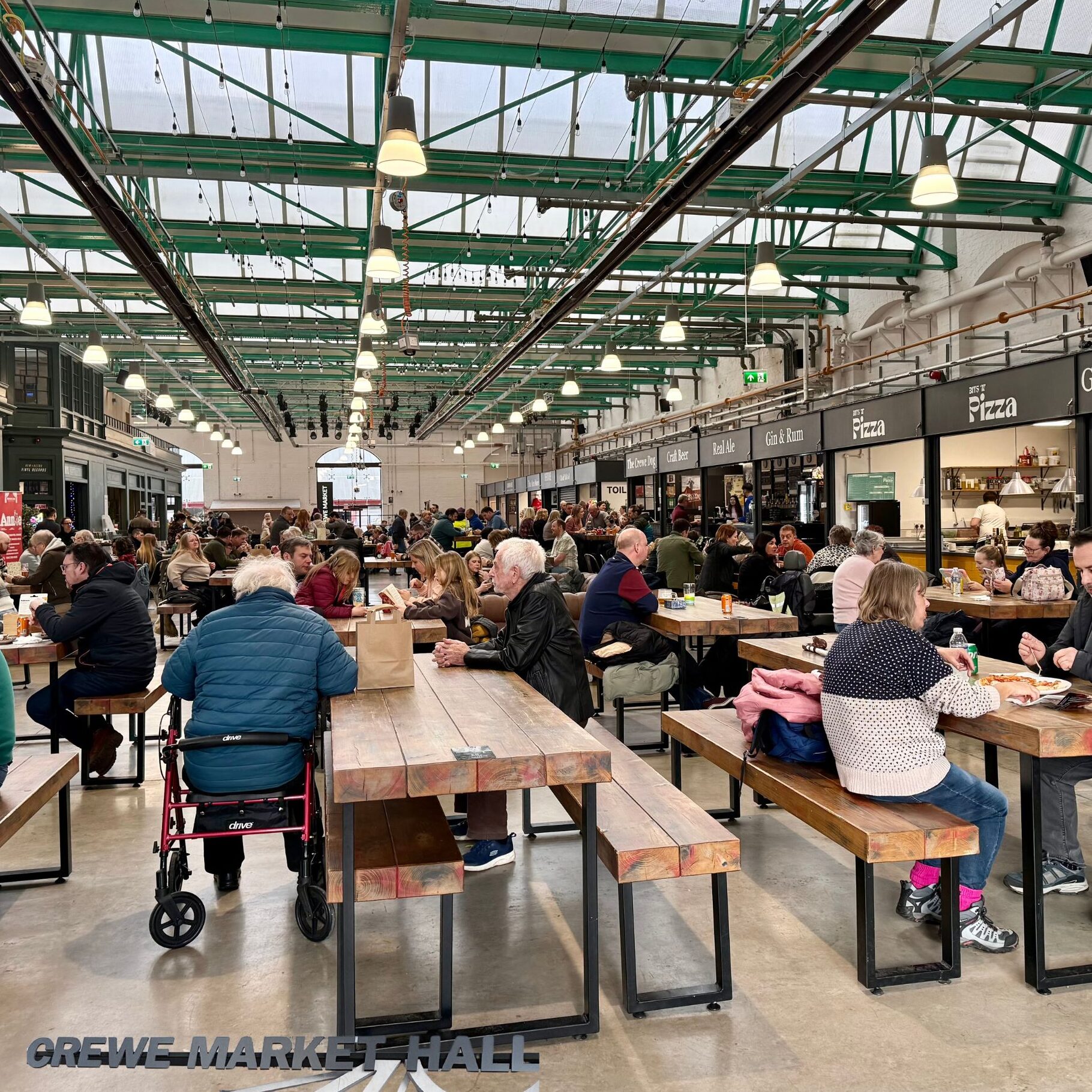
I’ve been watching a pattern unfold across the Northwest for a few years now. Traditional markets are transforming themselves. Crewe Market, where I used to work, is now a fancy food hall with a wine bar where the butchers used to be. Altrincham went the same route. Craft beer. Artisan coffee. Street food.
The transformations worked. Property values went up. Young professionals arrived. Success stories, the lot of them.
Bury Market didn’t follow that route. According to research from the University of Leeds, it attracts 150,000 visitors weekly. 70% of customers have been going for more than a decade. No wine bars. No craft beer. Just a traditional market that stayed true to itself while everyone else was transforming.
But now they’re building a £33 million Flexi Hall designed to attract younger customers with live music and food festivals. The wine bars are coming after all.
Maybe it’ll work. Maybe they’ll add what’s missing without losing what matters. Or maybe we’re about to watch what happens when you finally follow the playbook that everyone else has been using.
The Pressure Everyone Else Followed
This conversation makes anyone working in retail strategy uncomfortable. The pressure Bury Market faces: to modernise, attract younger customers, and do what everyone else is doing. That’s not unique to a 600-year-old market in Lancashire.
That’s the pressure every retail professional faces when leadership asks why the website isn’t more like Amazon’s, why stores don’t offer experiences like the Trafford Centre, and why the customer base skews a bit older than they’d like.
But Bury Market chose to protect the friction that created relationships, while others optimised it away. They invested in infrastructure for elderly locals and coach tourists, while others chased young professionals. They generated a £1.1 million annual surplus by being inconvenient, old-fashioned, and requiring customers to put in effort.
The 10-Minute Queue That Built Loyalty
At Bury, we found a tiny cafe tucked into a corner. Proper mugs. Proper brews. We sat shoulder to shoulder with traders on their breaks, everyone talking about bacon butties and chips and whether Happy Valley was coming back on the telly.
Across the way, I watched the queue at a fish stall. One woman waited nearly 10 minutes to get served, even though several other fish stalls were around. When she finally got to the front, the man behind the counter knew her name. He smiled, greeted her like a friend, and gave her his undivided attention for the next five minutes.
This wasn’t about fresh cod fillets. She came here for truly personal, one-to-one, warm and friendly customer service.
Any retail optimisation consultant would call that 10-minute wait a problem to solve. Reduce queue time. Add more staff. Make transactions faster, more seamless. Bring in some tech.
The Leeds research found that 79% of Bury Market customers regularly visit the same traders. Not just the same market, the same individual stalls. They’re not shopping efficiently. They’re maintaining relationships.
When you visit Bury Market, you can’t just walk in and get what you need. You have to know which stall does the best produce. You have to learn the traders’ names. You have to remember that Janet’s at the fish stall on Wednesdays, but it’s Mark on Saturdays.
That learning process takes time. Creates friction. It’s the opposite of what Crewe became: you walk into a clean, well-lit space, and everything’s immediately intuitive.
The same research found that 68% of Bury’s customers share news or information with traders during their visit. Actual conversation. And 99% feel safe and welcome.
Almost everyone who uses this space feels like it’s theirs.
When Friction Becomes the Feature
Food halls don’t have queues like that. You order, you pay, you collect. These days, you might not even need to go to the counter; most of it’s done on your phone. Very efficient.
And efficiency is great. But it’s not sticky.
When your leadership team talks about reducing friction, improving efficiency, speeding up transactions, how do you know which friction is waste and which friction is creating the loyalty you’re trying to build?
I don’t have a formula for that. But Bury Market made a choice. They protected the friction that created relationships even when it looked inefficient.
The Coach Party Strategy Nobody Else Wanted
Bury Market didn’t try to be for everyone. According to the Leeds study, 70% of regular customers are female. Over 50% are aged 60 or older. The core catchment area is within seven kilometres.
Most retail strategists would look at that demographic profile and panic. Where’s the diversity? Where are the young professionals? Where’s the growth?
Bury looked at who was coming and asked, “How do we become exceptional to them?”
They systematically built infrastructure for coach tourists. Earned “Coach Friendly” accreditation from the Consortium of Passenger Transport. Added a dedicated drop-off point adjacent to the market, free coach parking, a driver’s restroom, and £7.50 meal vouchers for drivers.
Last year, 1,235 coach parties visited. From Aberdeen, Truro, Sheffield, Preston, and Llandudno. People travel hours to visit a market.
The food hall strategy aims to attract young professionals with higher disposable income, who are more willing to spend on hot food, craft beer, and artisan coffee. That’s the demographic everyone else is chasing.
Bury market chose coach tourists and elderly locals instead.
The economic results were a 40% return on investment, a £1.1 million annual surplus, and a 93% occupancy rate. All by serving a demographic most retailers are trying to move away from.
The Authenticity That Can’t Be Faked
The coach tourists aren’t coming because they have relationships with the stall holders. They can’t, they only visit once, maybe twice if they really loved it.
They’re coming because the market is authentically a community space for locals. The Leeds research calls it a “convivial space”, somewhere social interactions matter just as much as commercial ones.
Coach tourists value seeing a real traditional market that hasn’t been sanitised or turned into a performance. The fact that locals are there having conversations, doing their shopping – that’s part of what makes it worth the journey.
The market functions as a destination because it prioritises being a community hub.
If Bury were to optimise just for tourists, make everything Instagram-perfect, remove the locals doing their shopping, and turn it into a forced market experience, it would lose exactly what makes it worth visiting.
The Demographic Reality They Couldn’t Ignore Forever
But there’s tension that Bury market can’t ignore: their core customer base is in their seventies. The research showed 70% have been visiting for more than 10 years. 61% of visits occur at least once a week.
These are extraordinarily loyal customers. But loyalty doesn’t solve mortality.
At some point, that customer base will literally die off. Bury has watched this demographic reality approach for years while every other traditional market in the UK is either closing or transforming.
So Bury is building a £33 million Flexi Hall designed to attract younger demographics through live music, food festivals, pop-up trading, and community events.
The hall is scheduled to open in autumn 2026. And nobody knows what’ll happen next.
Maybe it’ll work. Maybe the Flexi Hall will attract younger customers without alienating the 70-year-old who’s been buying fish from the same stall for 40 years. Maybe wine bars and traditional market stores can coexist. Maybe you can add Instagram moments without losing the community that made the place worth Instagramming in the first place.
The Questions Without Easy Answers
When everyone in your industry is moving in the same direction, what makes you confident enough to stay different? Bury market stayed the same for years, while Crewe market, Altrincham market, and countless others transformed. They generated profitability by refusing to follow the obvious routes. But eventually, demographic reality caught up.
The research on markets is clear. Most successful UK markets become more upscale, more expensive, and better designed for customers other than the ones who’d been using them for decades. Borough Market did it. Camden did it. They serve different customers now than they did 20 years ago. They’re financially successful. But they’re also completely different places.
Customers who used them as community spaces, people doing their weekly shop, and families on tight budgets can’t afford these markets anymore.
How do you know when it’s time to change and when change means losing what made you valuable?
The Black Pudding Paradox
We can’t talk about Bury Market without mentioning the Bury Black Pudding Company, which has an annual turnover of £5.8 million. It sells in every major UK supermarket. Employs 120 people. But it still maintains Stall Number 5 in Bury Market as the heart of the brand.
People travel to Bury specifically to buy black pudding from its source, even though they can get the identical product at their local Tesco. There’s something about the origin story, the pilgrimage, getting it from the place it comes from that creates value a supermarket shelf can’t replicate.
But what happens to that origin story when the market around Stall Number 5 starts looking like every other food hall?
The Uncomfortable Question for All of Us
Next time someone in a meeting says, “Everyone else is doing this,” it might be worth asking: What are we choosing to protect while everyone else is transforming? And do we still believe that choice is worth defending?
I’ll keep watching what happens at Bury. The transformation is happening whether the fish stall regular is ready for it or not.
Maybe Bury Market finds a way to be both: a traditional market and a modern experiential destination. A community hub for 70-year-olds and a draw for young professionals. A place where the same woman waits 10 minutes for cod fillets while next door someone’s drinking craft coffee.
Or maybe it’s the beginning of Bury market becoming what everywhere else already is.
If this episode resonated with you, I’d love to hear your thoughts. Do you love visiting a traditional market too?
Let’s connect – Find me on LinkedIn
Never miss an episode – please subscribe to Where’s Your Customer? wherever you get your podcasts and get fresh customer experience insights in your ears weekly.
Found this valuable? Please leave me a review. It helps other retail professionals discover these conversations and honestly means the world to me.
Share the knowledge – If someone in your network could benefit from the ideas we’ve talked about today, please share this episode with them.
If you’d like help with Customer Journey Mapping or Customer Experience Strategy – Let’s Chat.


