





Table of Contents
For many retailers, the click and collect customer experience has become one of the clearest examples of how digital and physical retail can work together. The online journey is often smooth, convenient and familiar. Customers can browse, buy and choose a collection option with very little friction.
But the journey isn’t complete when the order is placed. The customer still has to arrive in store and collect it.
That collection is the moment where the customer decides whether the click and collect service felt convenient or simply moved the waiting time to the pick-up part. Where the process is still manual, collection can take too many minutes.
This is where the biggest opportunity now sits. The strongest retailers are treating collection as part of the customer experience itself, not just the operation. That matters even more now because customers are not only comparing one retailer with another. They are comparing in-store collection with lockers, parcel shops and out-of-home networks that often feel faster, clearer and easier to use.
Where the click and collect customer experience breaks down
Jacob Hinson from eLocker highlighted that in some retailers, collections are still managed on paper. A team member has to locate the order, check the details, find the parcel and complete the handover manually. That may only take a few minutes, but for the customer standing at a counter while a queue builds behind them, it can feel much longer.
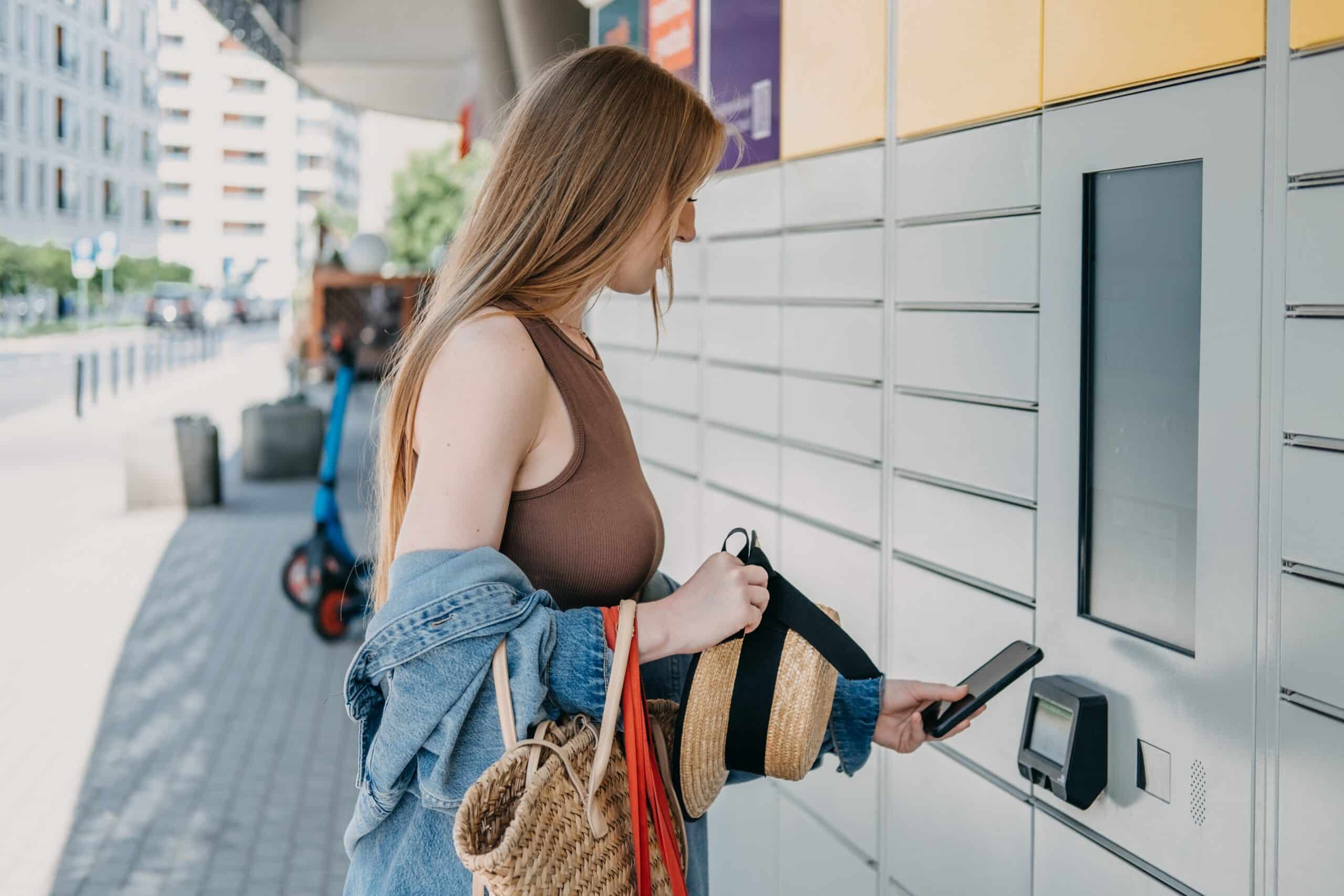
This is why the collection point now matters more than it used to. Customer expectations have changed. Out-of-home networks such as InPost, Evri and Royal Mail’s locker service, along with resale platforms like Vinted, have made fast, self-service collection and returns feel normal.
Customers are no longer judging in-store collection against how the retailer used to operate. They are judging it against the locker outside Lidl or the train station that took less than a minute.
Similar online-to-store gaps are covered in Online Shopping vs In-Store Shopping: Six Patterns UK Retailers Are Missing.
Who owns the click and collect customer experience?
One reason collection is often overlooked is that it belongs to different teams. Digital usually owns the online journey. Store operations owns what happens in the physical space. Customer experience leaders may be asked to improve the journey, but may not own the systems, staffing or the processes involved.
The gaps between each of these departments can make the click and collect experience easy to miss. It is not quite an e-commerce issue, not quite a store operations issue, and not always treated as a customer experience issue. But for the customer, none of that matters. They experience it as one journey.
In many retailers, operations is best placed to own the collection point because it has the clearest link to what happens in store. Operations can bring in IT, store estate, digital and CX support where needed, but the handover itself needs one accountable owner.
In practice, that owner can vary. In some businesses, the work starts with RFID or store technology teams. In others, e-commerce wants to keep ownership because the sale lives online. A growing number of retailers now have a dedicated product owner for the click and collect customer experience, which is a sign that the process needs clearer accountability.
Without that ownership, collection remains everyone’s problem and nobody’s priority. A similar question about ownership in CX is explored in Customer Experience Leadership: Is the Role Still One Job?.
Treating collection as customer experience, not logistics
Once the collection point has a clear owner, the next shift is how it is treated. It cannot just be seen as the final step in fulfilment. For the customer, it is part of the experience they remember.
The results from a case study by eLocker show why this is worth taking seriously. One retailer using an automated collection point recorded the top score on every customer response for 45 consecutive days. Consistency at that level is unusual, and it shows what can happen when collection is designed properly rather than simply managed.
The commercial case is also clear. A customer who has already come into store is more likely to spend while they are there. If collection is quick, clear and easy, it can support in-store revenue, increase repeat visits and reduce the cost per order.
That is what makes click and collect so interesting. Customer experience and cost are often treated as competing priorities. The collection point is one of the few areas where retailers can improve both at the same time.
How to improve in-store collection without a budget
Improving collection does not have to start with a major investment. It can start with something much simpler: experiencing the process as a customer.
Place real orders. Collect them from different stores. Try different days and times. The variation is often revealing. Five stores can produce five different experiences, and any problems are usually more obvious when you’re physically there at the counter.
Once the current experience is visible, map the journey. A manual collection process can involve six or seven separate touchpoints, from arrival and queueing to order lookup, stock retrieval and handover. A better-designed process may reduce that to three.
The value of mapping is that it shows exactly where delay, confusion or duplicated effort are in the journey. It also gives teams a practical target state to work towards, rather than a vague ambition to “make collection better”. This is the same method set out in the Customer Journey Mapping Guide for Retailers.
Returns deserve the same attention. Customers collecting or returning items often arrive with a small amount of uncertainty, impatience or frustration already built up. The process should be designed from that position, not around whatever store infrastructure happens to be in place.
Managing perceived wait time
Speed is important, but it is not the only part of the experience customers remember. A short wait can feel frustrating if the customer doesn’t know what is happening. A longer wait can feel more acceptable if the process is made clear.
Rory Sutherland makes this point through the example of the London Underground. One of the biggest improvements in passenger satisfaction came from platform indicators showing when the next train would arrive. The trains weren’t any faster, but the wait felt easier because passengers had information. Uber works in a similar way. Watching a car approach on a map feels very different from waiting with no visible progress.
The same principle applies to click and collect. A customer who is kept informed during a three-minute wait may feel better served than one left without updates for ninety seconds.
That means retailers should look beyond speed alone. Clear directions to the collection point, visible progress, accurate wait-time expectations and simple updates at each stage can all reduce frustration. The aim is not just to make collection faster. It is to make it feel easier, clearer and more controlled for the customer.
That is often where the best improvement starts.
Key takeaways
- Customers do not separate the checkout from the collection experience. If the handover is slow, unclear or inconsistent, it affects how they remember the whole journey.
- The click and collect customer experience needs clear ownership. Without one accountable person or team, the collection point can sit between digital, operations and CX without being properly improved.
- The business case can be measured. Better collection can support higher satisfaction, stronger repeat visits, increased in-store spend and lower cost per order.
- Free collection only works as a footfall driver if the experience feels convenient when the customer arrives. The offer and the execution need to match.
- Retailers can learn a lot by testing their own process before investing in technology. A day spent placing and collecting real orders will often reveal where the biggest improvements should start.
About eLocker

eLocker provides smart locker technology for retail click and collect, returns, warehouses and workplace environments.
Its systems are designed to make handovers faster, clearer and easier to manage, helping retailers reduce manual processes, improve customer experience and lower the cost of collections and returns.
In this episode, I spoke with eLocker founder Jacob Hinson about why the collection point is such an important part of the customer journey, and how better-designed handover processes can support both customers and store teams.
You can find out more at elocker.com or connect with Jacob on LinkedIn: Jacob Hinson.
Let’s Connect
Let’s connect – Find me on LinkedIn (https://www.linkedin.com/in/jo-williams-ccxp/)
Never miss an episode – please subscribe to Where’s Your Customer? wherever you get your podcasts and get fresh customer experience insights in your ears weekly.
Found this valuable? Please leave me a review. It helps other retail professionals discover these conversations and honestly means the world to me.
Share the knowledge – If someone in your network could benefit from the ideas we’ve talked about today, please share this episode with them.


