





Table of Contents
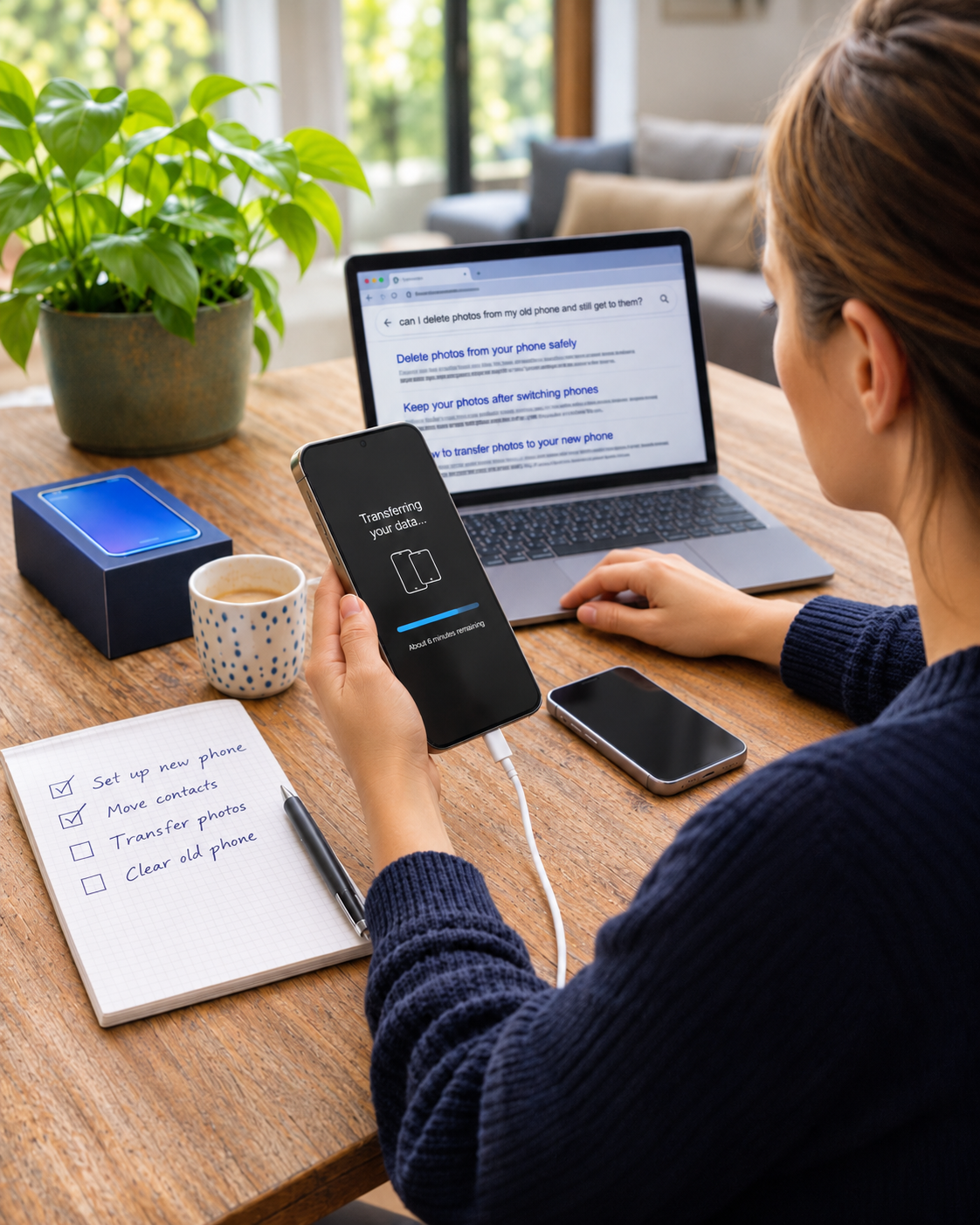
I recently upgraded my phone. I spent about 45 minutes in an O2 shop, going through the offers and what the upgrade would mean for me. It was a pretty positive experience. I left with my new phone and charged it when I got home. Then I had to set it up and clear my old one. That part took longer than I expected, and I found myself searching online for answers, including whether I could delete photos from my old phone and still get to them easily.
The shop did its part well. They made the sale, they explained my options, and I left with the right phone. But what I really wanted was a working phone with my contacts and photos on it and the old phone safely cleared. Most of that happened by me, at home, without help.
The same thing happens across much of retail. A retailer often perceives its responsibility as done at the point of sale. Its measures usually stop at the last step it controls: the sale, the delivery or the end of an interaction. The post-purchase customer experience, where the customer finds out whether they can use what they bought, happens after that point and is rarely measured.
Why retail measures stop before the post-purchase customer experience ends
Retail measures are usually built around each step a retailer can control. Delivery teams report on-time delivery, which shows that a washing machine arrived in the slot the customer booked, for example. Fulfilment teams report order completion, which shows that every item was supplied in full. Contact centres report containment and handling times. Each measure is useful, but each one only covers the work done by the team that reports it.
These are often the measures teams are also targeted on, so the experience stage each team is asked to improve ends where its own involvement finishes. They might not ever know whether the customer can use what they bought.
Three questions could help a team see what its current measures leave out:
Three questions to test your post-purchase customer experience
Choose one customer journey and work through these questions with the teams who own each part of it.
1. What is the customer trying to achieve?
Ask customers what they are trying to get done, then compare their answer with what your process is designed to complete. For the phone upgrade above, the process ended with the handset in my hand. But my goal was a working phone with my information moved across.
Wickes found this difference in its own data. From 2020, it worked with its marketing technology partner, Deployteq, on what it calls the Missions Motivation Engine, referenced in its 2022 annual report. DIY customers saw Wickes as a place to buy a specific product, and most bought from Wickes once a year, from a single category. A customer redoing a bathroom needs tiles, adhesive, grout, sealant and tools, and yet Wickes might only see one part of that project.
Wickes then defined customer missions, such as Bathroom Finishing and Outdoors and Gardening, and organised its emails, app messages and offers around them. The programme aimed to encourage customers to buy more of what they needed for their project from Wickes. The report doesn’t say whether Wickes also checks if customers finish their projects. So that brings us to the next question:
2. How would you know whether your customer achieved their goal?
List the measures you already report for the journey, write down what each one records, and decide what you would need to ask customers to find out whether they reached their goal.
The washing machine example shows why this matters.
AO’s installation guidance for integrated machines says that if there is a problem with the customer’s plumbing, its team will not install the appliance and cannot support with the plumbing. Installation and removal of the old machine are optional extras, and Which? Price comparison shows charges vary between washing machine retailers. An installer who is not a plumber should not be altering pipework, so it’s understandable, but it does mean a household can have the machine delivered on time and the order closed, and still be unable to do its washing until a plumber has been. A short follow-up question a few days after delivery, asking whether the machine is in use, would show what the delivery measure cannot.
Contact centre measures need the same check. A Women in CX write-up of a cross-industry CX panel describes customers who give up on a chatbot being counted as “contained”, because the complaint never reached a colleague. Where containment is defined that way, the figure improves when customers leave without an answer. Any retail contact centre reporting containment should check how its definition treats a customer who abandons the conversation. Satisfaction scores collected immediately after a delivery or contact have a similar limitation, because they record only how one step felt.
3. Where can you help, and who needs to be involved?
Find the point where customers struggle, bring together the people who own that part of the journey, agree on one change and check that it worked.
Journeys that take weeks need this most. For a fitted kitchen or bedroom, the sale happens near the start of the project, and the finished room arrives after delivery and installation. Which? Surveyed 1,157 people who had fitted bedroom furniture installed in August and September 2025. One in five reported a problem with the installation, most often the work taking longer than planned. Those customers had ordered and paid, and their room was still not finished on the date they had planned around.
No single team sees that journey from start to finish. The sales team sees the order, the delivery team sees the drop-off, the installers see the fitting and customer service sees the complaints. Where an outside company does the fitting, the ownership questions covered in Third Party Customer Experience apply as well.
A practical starting point is to speak to customers who have recently had an installation and to review the contact reasons logged in the weeks before. If customers are unsure how to prepare for the fitter, change the information sent before delivery for a group of customers and check whether those calls fall.
The same Women in CX write-up describes a Sainsbury’s team working on Nectar that made a habit of this. After each change, it went back to the original customer measure to check the change had done what was intended.
Where a retailer’s responsibility ends
A retailer can understand the customer’s goal without taking responsibility for all of it. AO is not going to re-plumb a kitchen, and a phone shop is not going to set up a customer’s banking app. Many customers want to buy quickly and finish the job themselves.
What the goal tells a retailer is where its help would make the most difference. Someone buying a tube of sealant usually knows what they need. Someone tiling a bathroom for the first time may want help choosing products and using them. For me, as a new mobile phone customer at the start of this article, a short checklist covering what to check before clearing my old phone, how to keep access to photos and where to get help might have been helpful.
But each kind of help costs staff time, skills or money, so the choice should rest on where customers struggle, how much difference the help would make and what the business can deliver.
Key takeaways
- Find out what the customer is trying to achieve. Compare the customer’s goal with what your process is designed to complete, starting with one journey.
- Check what your measures show when the customer does not get there. On-time delivery, order completion and containment can all report success while the customer still has work to do. A follow-up question after delivery shows what they cannot.
- Agree on one change where customers struggle, and check that it worked. Bring together the teams who own each stage, and go back to customers afterwards to confirm it helped.
Let’s connect – Find me on LinkedIn (https://www.linkedin.com/in/jo-williams-ccxp/)
Never miss an episode – please subscribe to Where’s Your Customer? wherever you get your podcasts and get fresh customer experience insights in your ears weekly.


