





Table of Contents
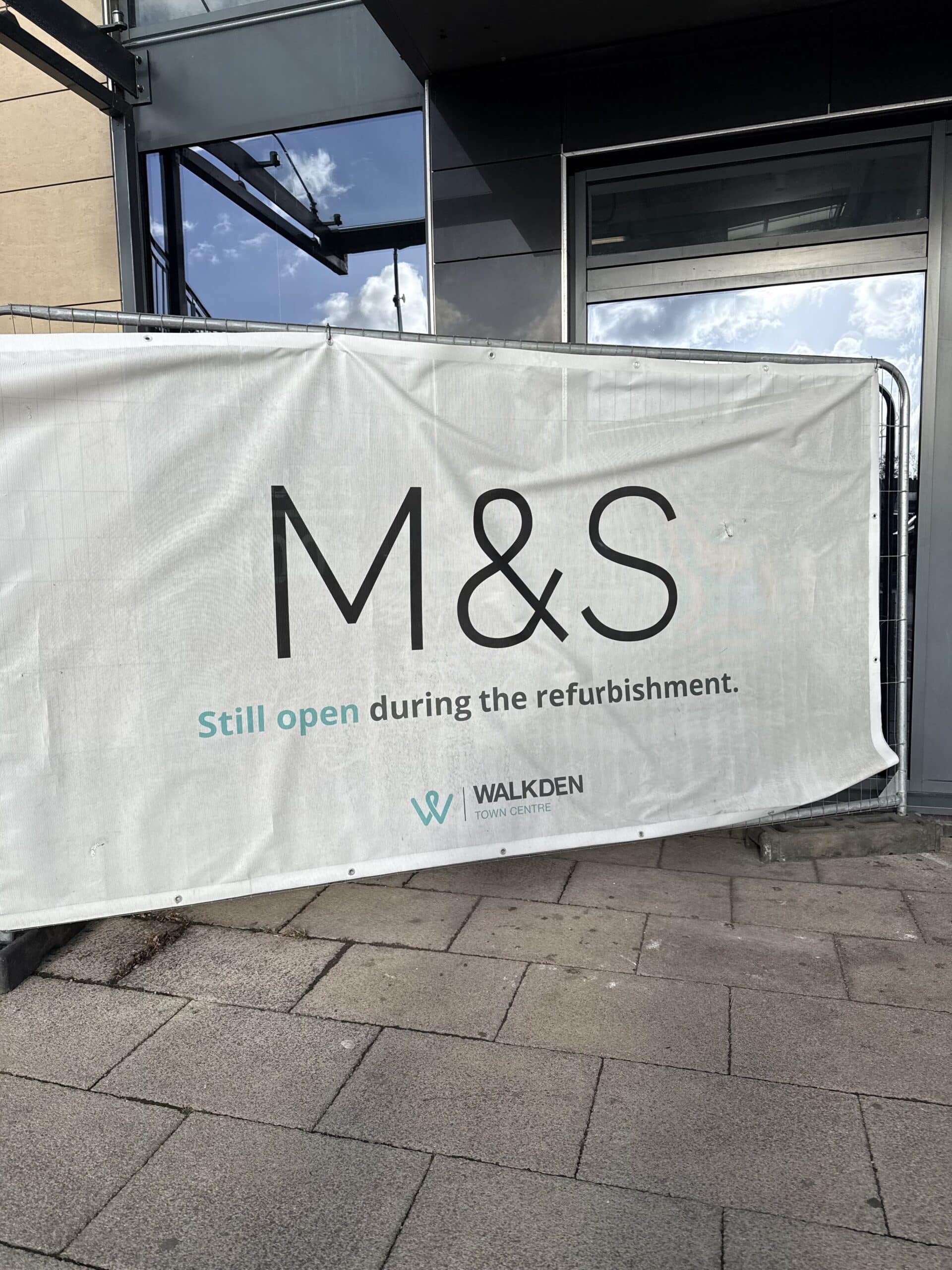
Sainsbury’s closed its remaining 61 cafés in January 2025. Morrisons closed 52 two months later, along with 18 Market Street Kitchens, 13 florists and four pharmacies. M&S has been shutting cafés in smaller stores during refits and replacing them with more stock and self-checkouts.
Read together, those decisions suggest UK retailers have concluded that community space in retail is too expensive to maintain. Sales per square foot contributes more to the bottom line. The British Retail Consortium estimates that employer National Insurance and National Living Wage changes added around £5bn to retailers’ employment costs in 2025, which puts a labour-heavy café in an exposed position.
But actually, what happened after these closures tells a different story.
What happened to supermarket cafés?
Sainsbury’s closed 61 of its own cafés. But it now operates more than 150 cafés with external providers. The fiftieth Costa Coffee inside a Sainsbury’s opened at Leicester North on 30 April 2026, part of a partnership that has created over 400 jobs and nearly £16m of combined investment, with at least fourteen more sites planned this year.
Morrisons closed 52 cafés in March 2025. But on 10 August 2026, Harry Ramsden’s began serving in 32 of them.
And Asda has not closed any of its cafés. Rather, it spent £10m modernising 180 of them, finishing in November 2025, adding digital ordering screens and a wider menu. Compass Group manages them.
So 3 of the big 4 supermarkets came to the same conclusion. A café is a second business inside a shop, with its own staff, training, equipment, stock, food safety regime and management attention. Handing that to Costa, Compass or Harry Ramsden’s keeps the community space, and the reason to come in, while removing the operating burden.
M&S is an exception. It still runs over 300 cafés serving around 32 million customers a year. Because it operates them itself, it has to strategically decide where to run cafés, store by store. For example, the café at Douglas closed to extend the Foodhall and bakery, while Aberdeen Union Square opened an expanded Foodhall with a new coffee shop and Swindon Orbital nearly doubled its café to 140 seats. Customers don’t visit an average M&S. They visit a particular store, in a particular place, for a particular kind of trip. A café may add value to that trip in Swindon but take up more useful space in Douglas.
Running the café directly also keeps it inside the loyalty scheme. M&S uses its cafés this way. Its parent and baby mornings run every Tuesday in the M&S Café with a free slice of cake, and M&S describes them as connecting a community of parents. M&S Café rewards sit inside Sparks. An offer like that does not reward a trip that was going to happen anyway. It brings a particular group of customers into the store on a weekday morning, and most of them will buy something else while they are there.
Retailers are also using shop-floor space for classes, clubs, workshops and places to meet. Before deciding whether those spaces earn their keep, we need to understand what customers are using them for.
What community space in retail is really for
Amid cafe closures, other retailers are spending money on exactly this kind of space.
At John Lewis, hospitality now accounts for more than one in five in-store transactions, with sales up nearly 10% in the year to May 2026 and The Place to Eat being replaced by Platter across 32 stores. The Oxford Street site has 300 seats, an open kitchen, a deli and a coffee roastery. Here, the food is meant to be a reason for the trip rather than being a mid-shop rest.
Then there is community space in retail being dedicated to doing something other than food. The Gymshark store on Regent Street includes a Sweat Room that runs more than 50 free classes a week and a weekly 5K run club. During the fifty minutes somebody spends in a strength class, that floor area sells nothing. Judged on sales per square foot, it would close tomorrow.
Rapha’s London Clubhouse has a café that riders leave from, and in 2021 the site was expanded to include more retail space and a larger café. Waterstones runs book clubs in its cafés. Hobbycraft recently opened three new branches inside garden centres and says it will keep investing in workshops and in-store craft expertise.
What sets these examples apart is that the space supports an activity customers already associate with the retailer. Gymshark offers customers somewhere to train. Rapha gives cyclists a place to meet before a ride. Waterstones brings readers together to discuss books, while Hobbycraft helps customers learn and make things. A traditional supermarket café has a less obvious connection to the main reason people visit the store. It may still be useful, but when costs rise, its value can be harder to defend.
Retailers often describe any shared space or in-store event as “community”, but a one-off event does not create a community on its own. That develops when people can take part regularly, joining is easy, and there is a reason to return beyond buying something. That separates a recurring run club or book group from an occasional masterclass or product launch.
Does community space in retail pay for itself?
The honest answer is that almost nobody has published evidence either way. The John Lewis transaction share is the strongest figure in the public domain, and even that doesn’t say whether somebody who has lunch spends more elsewhere in the shop or returns more often. No UK retailer publishes anything resembling the lifetime value effect of a free class. They may or may not know.
The theory stands, though. A space where people meet, train, read or eat is meant to build familiarity with the shop, then preference, then a customer who visits more often and stays with the brand longer. That is the theory behind the spending.
Functional shopping keeps moving online, and online does it cheaper, faster, and 24/7. What a physical shop can do that a website cannot is put people in the same place at the same time. A store that gives up on that is left competing on price, and Aldi, Lidl and B&M already compete on price better than most retailers can.
So the question isn’t whether the community space in retail pays for itself. It is what the shop is for besides a transaction.
What Morrisons found out after removing the counters
The same Morrisons programme that closed the cafés also closed 35 meat counters and 35 fish counters. The stated reason was that operating costs were “significantly out of line with usage, volumes or the value that customers place on them”.
In July 2026, Morrisons began reopening those counters after customer backlash. A spokesman said: “Our Market Street counters are part of our DNA. They are at the heart of our offer and a real differentiator for Morrisons.” They also said the closures helped them learn how to operate more efficiently, and they have upgraded digitally in some areas too.
Usage and volume are straightforward to count. What a fish counter contributes to whether somebody chooses Morrisons over Asda is not clear, and a customer can value something they might not buy often. Transactions show who used the counter. They do not show who valued its being there.
The same thing happens at the click-and-collect desk. It takes up floor space and a colleague’s time, but it makes no money because the customer paid online days ago. Whether that collection goes well determines whether they order again, and every order collected is one the retailer did not have to deliver. Both of those positive effects usually land in the online sales figures and the delivery costs, not against the in-store collection desk. If not careful, the shop floor desk reads as a cost, yet what it contributes gets counted somewhere else.
Community space in retail is difficult to measure. Cafés, counters, and activity spaces cannot all be judged by the same measure either, because they aren’t doing the same job. Before changing any part of the shop floor, you could ask five questions.
Five questions for any part of the shop floor
One: what job is this space doing? “A café” is a format, not a job. Somewhere to buy lunch, somewhere to rest partway round a big store, somewhere to meet a friend, and a reason to choose this store over the one down the road are four different jobs.
Two: are we measuring it against that job? Each of those four has its own test. A café that sells lunches is judged fairly on covers, sales, and margin. One that exists so people can rest is judged on whether the customers who use it stay longer and spend more than the ones who don’t. One that exists so people can meet is judged on whether they arrive in twos and threes, and at times they would not otherwise have come in. One that exists to make people choose this store is judged on how often those customers come back. Only the first of the four shows in the figures a store manager sees.
Three: is there a clear reason for customers to use it? That can be as involved as a training session or as simple as somewhere to sit halfway round the weekly shop. If you can’t describe what customers get from the space, that is the point to start asking why it exists.
Four: do we need to be the ones running it? Closing a space and handing it to somebody else are two different decisions. If it is a service customers want that a specialist can run better (coffee being the obvious one), a partner is probably the right answer, and Sainsbury’s, Morrisons and Asda are good examples. If the space is part of why somebody chooses that store, outsourcing costs something: the margin, and the hour the customer spends sitting inside another brand. The model also needs footfall to interest a partner, which is why it can appear in large stores first and may not be an option for a smaller retailer.
Five: how would we know if we were wrong? Decide what to measure before making the change, and measure the customers who used the space rather than the store. The number of people using a café is small compared with the number using the store, so removing it will not move the store total in either direction, which means the store total cannot answer the question. Instead, identify those customers from loyalty or till data first. Record how often they visit, what they spend and when they come in. Compare the same group six and twelve months after the change. A group that has stopped coming (older customers, or parents with young children) will show up in that comparison.
Resources mentioned
- Sainsbury’s — closure of remaining cafés and counters, January 2025 — the original announcement and its stated reasoning
- Sainsbury’s preliminary results 2025: how the recovered space was reallocated to fresh food
- Episode 39 — the collection counter and click and collect the same measurement problem at the collection desk
- Episode 17 — the five conditions of a customer experience: why operating conditions, rather than visible features, produce the experience customers describe
Let’s connect: Find me on LinkedIn (https://www.linkedin.com/in/jo-williams-ccxp/)
Never miss an episode: Please subscribe to Where’s Your Customer? Wherever you get your podcasts, get fresh customer experience insights in your ears weekly.
Found this valuable? Please leave me a review. It helps other retail professionals discover these conversations and honestly means the world to me.
Share the knowledge: If someone in your network could benefit from the ideas we’ve talked about today, please share this episode with them.


